"In the Gas Chambers."
Wiktor Siminski
Pencil
(Sachsenhausen, 1944)

When I first looked at this image, I was shocked and disgusted.
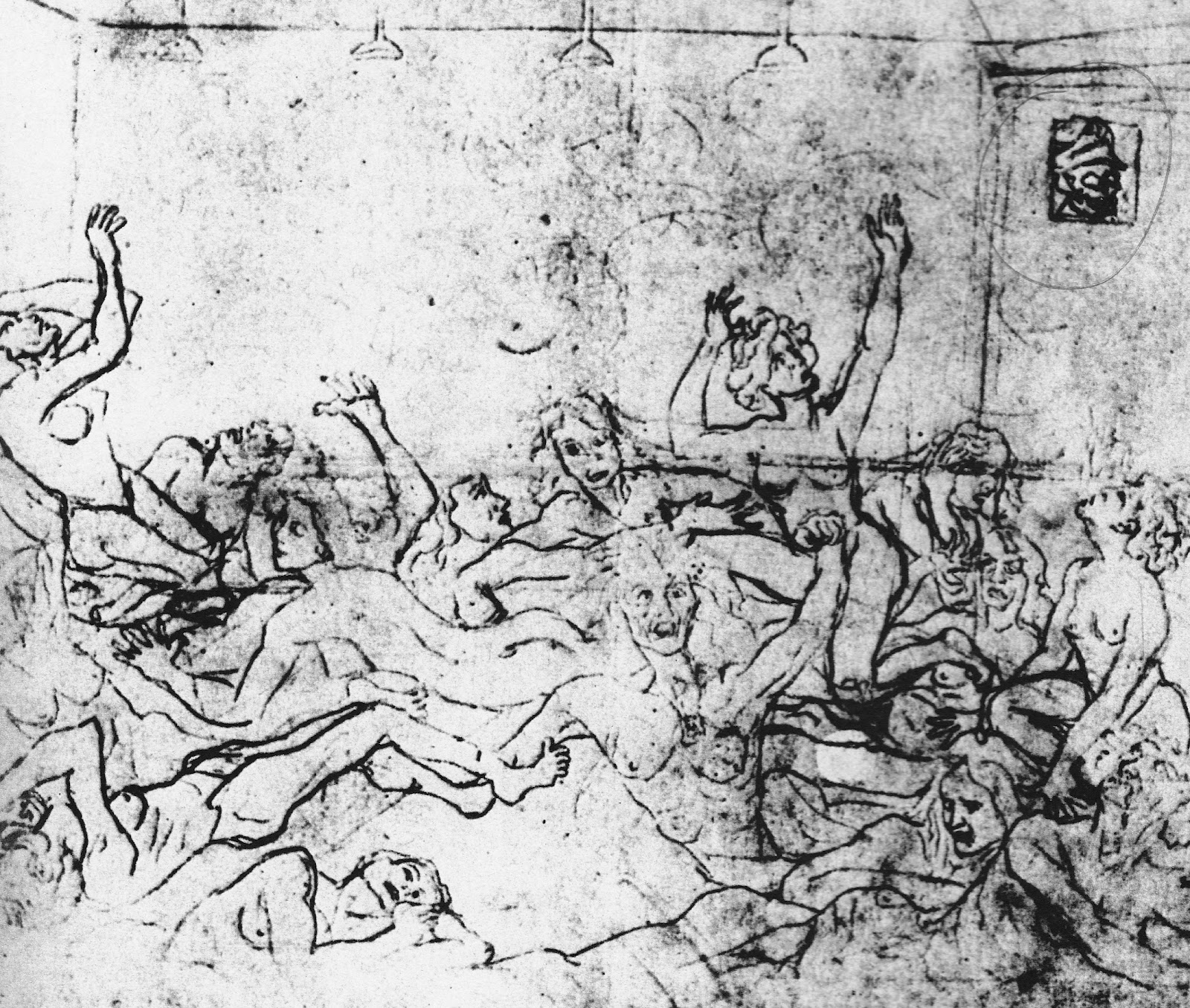
The subject of this pencil drawing by Siminski, which was created at Sachsenhausen Extermination Camp in 1944, documents mass extermination of female prisoners by the Nazi's, through the horrific method of gassing.
The subject matter is revolting and inhumane. I am left in despair at the helplessness depicted in these suffocating individuals but also by the fact that Siminski, like so many others, were subjected to this kind of visual torture every day in Camp life.
I think that these feelings must come from the way in which Siminski has created this image. The construction of the artwork brings you inside the Gas Chamber. On the ceiling, you can see the old trick - shower hoses - used by the Nazi's to deceive and "reassure" the prisoners that they were going to come out alive. The viewer is alongside these women as they twist into helpless poses, almost reaching for any kind of help, for a breath of clean air, for hope that this torture will soon end as the gas is unleashed.
The way in which Wiktor Siminski has drawn these women, to me, resembles the beautifully elegant, curvaceous Renaissance studies we see from the likes of Botticelli and Da Vinci. Perhaps this is why the female figures exude such innocence? I feel that despite the fact that the Nazi's aim was to dehumanise these people, this image shows the females as human beings and with feelings. And also, that haunting and questioning expression..."Why?".
After analysing this pencil drawing some more, I spot the SS Guard leering in through the window. Watching, with a haunting smile as he carries out this atrocity. But then, I see that his face is actually a skull. Like Death watching over as he claims more victims. And also, like the skull that made up the SS Insignia. A true image of terror - an image that brings home the reality and the cruelty of the Holocaust and the Nazi Regime.
I am reminded, as I look through this image, yet again, of Vladimir Propp's theory. Clearly, the Villain is shown and so are the Desperate in need of help. Unfortunately, the Hero is missing.
Pencil
(Sachsenhausen, 1944)
The subject of this pencil drawing by Siminski, which was created at Sachsenhausen Extermination Camp in 1944, documents mass extermination of female prisoners by the Nazi's, through the horrific method of gassing.
The subject matter is revolting and inhumane. I am left in despair at the helplessness depicted in these suffocating individuals but also by the fact that Siminski, like so many others, were subjected to this kind of visual torture every day in Camp life.
I think that these feelings must come from the way in which Siminski has created this image. The construction of the artwork brings you inside the Gas Chamber. On the ceiling, you can see the old trick - shower hoses - used by the Nazi's to deceive and "reassure" the prisoners that they were going to come out alive. The viewer is alongside these women as they twist into helpless poses, almost reaching for any kind of help, for a breath of clean air, for hope that this torture will soon end as the gas is unleashed.
The way in which Wiktor Siminski has drawn these women, to me, resembles the beautifully elegant, curvaceous Renaissance studies we see from the likes of Botticelli and Da Vinci. Perhaps this is why the female figures exude such innocence? I feel that despite the fact that the Nazi's aim was to dehumanise these people, this image shows the females as human beings and with feelings. And also, that haunting and questioning expression..."Why?".
After analysing this pencil drawing some more, I spot the SS Guard leering in through the window. Watching, with a haunting smile as he carries out this atrocity. But then, I see that his face is actually a skull. Like Death watching over as he claims more victims. And also, like the skull that made up the SS Insignia. A true image of terror - an image that brings home the reality and the cruelty of the Holocaust and the Nazi Regime.
I am reminded, as I look through this image, yet again, of Vladimir Propp's theory. Clearly, the Villain is shown and so are the Desperate in need of help. Unfortunately, the Hero is missing.

